
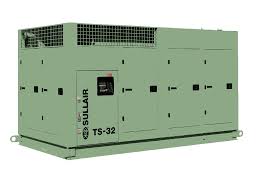
Two-stage industrial rotary screw compressors are a key component in many industrial applications, offering high efficiency and reliable performance. Here’s an overview of these compressors, including how they work, their benefits, and common applications:
How Two-Stage Rotary Screw Compressors Work:
- Compression Process:
- First Stage: Air is drawn into the compressor and initially compressed by a pair of helical rotors. The air is partially compressed in this first stage, which reduces its volume and increases its pressure.
- Cooling Interstage: After the first stage, the air passes through an intercooler, where it is cooled to reduce the temperature before entering the second stage. This cooling step is crucial as it improves efficiency by reducing the amount of work required in the second stage.
- Second Stage: The cooled, partially compressed air enters the second set of rotors, where it undergoes further compression to reach the final discharge pressure.
Key Features of Two-Stage Rotary Screw Compressors:
- High Efficiency:
- Two-stage compression is more energy-efficient than single-stage compression, especially when high pressures are required. By splitting the compression process into two stages with cooling in between, the overall energy required is reduced.
- The intercooling process significantly decreases the temperature of the air before the second stage, lowering the power consumption.
- Enhanced Reliability:
- Two-stage compressors are built for heavy-duty, continuous operation, making them suitable for demanding industrial environments.
- The design typically includes high-quality components, such as durable rotors and bearings, which contribute to long service life and reduced maintenance needs.
- Superior Performance:
- These compressors can achieve higher pressures more efficiently, making them ideal for applications requiring a consistent supply of high-pressure air.
- The use of two stages allows for better control over the compression process, resulting in more consistent output and improved air quality.
- Reduced Heat Generation:
- By cooling the air between the two stages, these compressors generate less heat than single-stage models. This not only improves efficiency but also extends the life of the compressor components.
- Quiet Operation:
- Two-stage rotary screw compressors generally operate more quietly compared to other types of compressors, thanks to their smooth, continuous compression process and effective sound insulation.
- Variable Speed Drive (VSD) Options:
- Many two-stage compressors come with the option of a Variable Speed Drive (VSD), which adjusts the compressor’s speed based on the air demand. This further enhances energy efficiency and reduces operating costs.
Applications of Two-Stage Rotary Screw Compressors:
- Manufacturing: Used in processes that require a constant, reliable supply of compressed air, such as in assembly lines, pneumatic tools, and material handling.
- Automotive Industry: Essential for powering equipment in automotive plants, including painting, welding, and assembly operations.
- Pharmaceuticals: Provides clean, oil-free compressed air for sensitive processes in the pharmaceutical industry.
- Food and Beverage: Ensures the supply of clean air for packaging, processing, and pneumatic conveying systems.
- Oil and Gas: Utilized in exploration, extraction, and refining operations where high-pressure air is needed.
- Textiles: Used in weaving, dyeing, and finishing processes where precise control over air pressure is critical.